3 Types of EPOS Systems for Your Business
Electronic Point of Sale (EPOS) systems are enabling a new wave of technology integration and efficiency boosting for businesses of all kinds. So, what are EPOS systems? What are the types of EPOS systems? And how can you choose the right one for your business?
In this blog post, we’re going to answer all these questions, so strap in and learn with us as we delve into the exciting world of EPOS systems.
What is An EPOS System?
An EPOS system is the key to building a thriving modern retail business. As well as serving as your till, like a traditional POS, they enable a range of smart features such as stock monitoring, loyalty programme creation, booking system management, real-time reporting and trend spotting, virtual and online payments and much more.
These additional benefits enable huge leaps in business efficiency, saving time and money and allowing you to deploy resources more effectively. But, as we’ve touched on, there are three different types of EPOS systems, each with a different way of operating.
What Types of EPOS Systems are Available?
The three different types of EPOS systems include fixed, mobile and tablet. Let’s delve into each type and look at the advantages and disadvantages.
1. Fixed EPOS systems
A fixed EPOS system offers a stationary unit, including your screen and card reader. This acts as the focal point of your business and can be integrated with a range of complementary systems such as printers and scales.
Benefits of a fixed EPOS system
Because they don’t need to be carried, fixed EPOS systems can include larger screens for improved visibility and usually offer more stable internet connections. Their ability to be integrated with equipment such as scales also sets them apart from other systems.
Drawbacks of a fixed EPOS system
Fixed EPOS systems cannot be carried around your premises as needed, and are therefore less adaptable than mobile or tablet solutions.
2. Mobile EPOS systems
Mobile EPOS systems are, well, mobile! They operate using handheld hardware and are much smaller than fixed systems.
Benefits of a mobile EPOS system
Unlike fixed systems, a mobile EPOS can be carried around your premises, allowing your staff to take payments from wherever is most convenient for the customer, and even sign people up to loyalty schemes on the go. They occupy a significantly smaller footprint and are ideal for businesses with limited space.
Drawbacks of a mobile EPOS system
Mobile EPOS systems feature smaller screens and cannot maintain a wired connection to the internet, potentially reducing their reliability if you struggle with internet issues.
3. Tablet EPOS systems
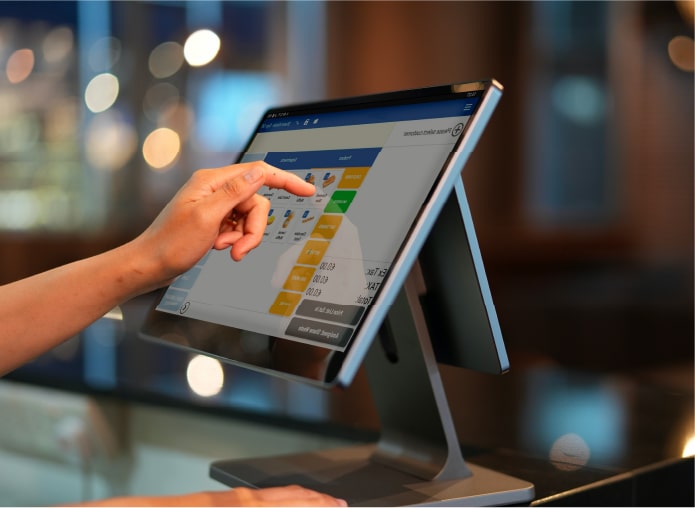
As the name suggests, tablet EPOS systems operate using a tablet computer, integrating every function needed into one piece of hardware.
Benefits of a tablet EPOS system
A compact footprint allows your whole EPOS system to be carried around and relocated as needed, making it perfect for flexible retail environments or trade stands and fairs.
Drawbacks of a tablet EPOS system
As with other portable types of EPOS system, tablet EPOSs sacrifice screen size for portability and require a dependable Wi-Fi network to work at their best.
Explore NPI EPOS Solutions Today
At NPI, we offer different types of EPOS systems for businesses, including fixed, portable and tablet options. Our advanced systems allow you to integrate all your business management tools into one platform, where you can take payments, monitor stock, spot trends, manage bookings, maintain customer loyalty schemes and much more.
Discover a new world of efficiency for your business, whatever your sector, with our suite of user-friendly EPOS solutions, built with your success in mind. Contact our friendly team today for a quote – call 01-4475299, email sales@np.ie or fill out our contact form here.
Types of EPOS Systems: FAQs
Is EPOS a CRM?
By definition, EPOS systems are not necessarily CRMs (Client Relationship Management). However, NPI’s EPOS systems include a range of advanced features such as the ability to create and manage loyalty programmes, oversee bookings and even take deposits which allow it to act as a de facto CRM.
What are the most common operating systems for POS devices?
Many different types of EPOS systems use Microsoft software to operate their devices. At NPI, we have developed our own intuitive operating system that allows you to get the very best out of our hardware and access a range of intelligent features, proven to drive efficiencies across the board.